Haechi: Simple Commitment-based Keyless In-person Verifiable Elections
- Josh Benaloh, Microsoft; Jiwon Kim, University of Michigan
For decades, verifiable election systems have typically relied on encrypting ballots to maintain voter privacy. Encryption requires keys, and the management of these keys is usually one of the most cumbersome and error-prone components of the system. But in-person elections—where one or more devices are used to each collect many votes—can use cryptographic commitments rather than encryption and completely obviate the need for cryptographic keys, leading to solutions that are much simpler and more robust than the encryption-based approaches. Currently deployed E2E-verifiable voting systems also produce large election records, which can sometimes become an obstacle to election verification, by increasing the cost of hosting, distributing, and verifying election data. Using modern techniques for compact ZK proofs, Haechi improves on past commitment-based and encryption-based solutions by drastically reducing the size of the election records, leading to improvements of over an order of magnitude compared to several real-world deployments.
-
-

Josh Benaloh
Senior Cryptographer
-

-
-
系列: Cryptography Talk Series
-
-
-
-
-
-
-

Efficient Homomorphic Integer Computer from CKKS
- Jaehyung Kim
-

Fuzzy Extractors are Practical
- Melissa Chase,
- Amey Shukla
-
-
-
-
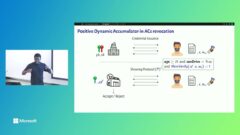
Lattice-Based Accumulator and Application to Anonymous Credential Revocation
- Victor Youdom Kemmoe,
- Betül Durak
-

Efficient Secure Aggregation for Federated Learning
- Varun Madathil,
- Melissa Chase
-
-
-
-

Hamming Quasi-Cyclic
- Edoardo Persichetti
-
-
-

Attestations over TLS 1.3 and ZKP
- Sofía Celi
-

A Closer Look at Falcon
- Jonas Janneck
-
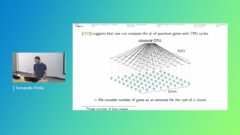
Quantum Lattice Enumeration in Limited Depth, Fernando Virdia
- Fernando Virdia
-
-
-